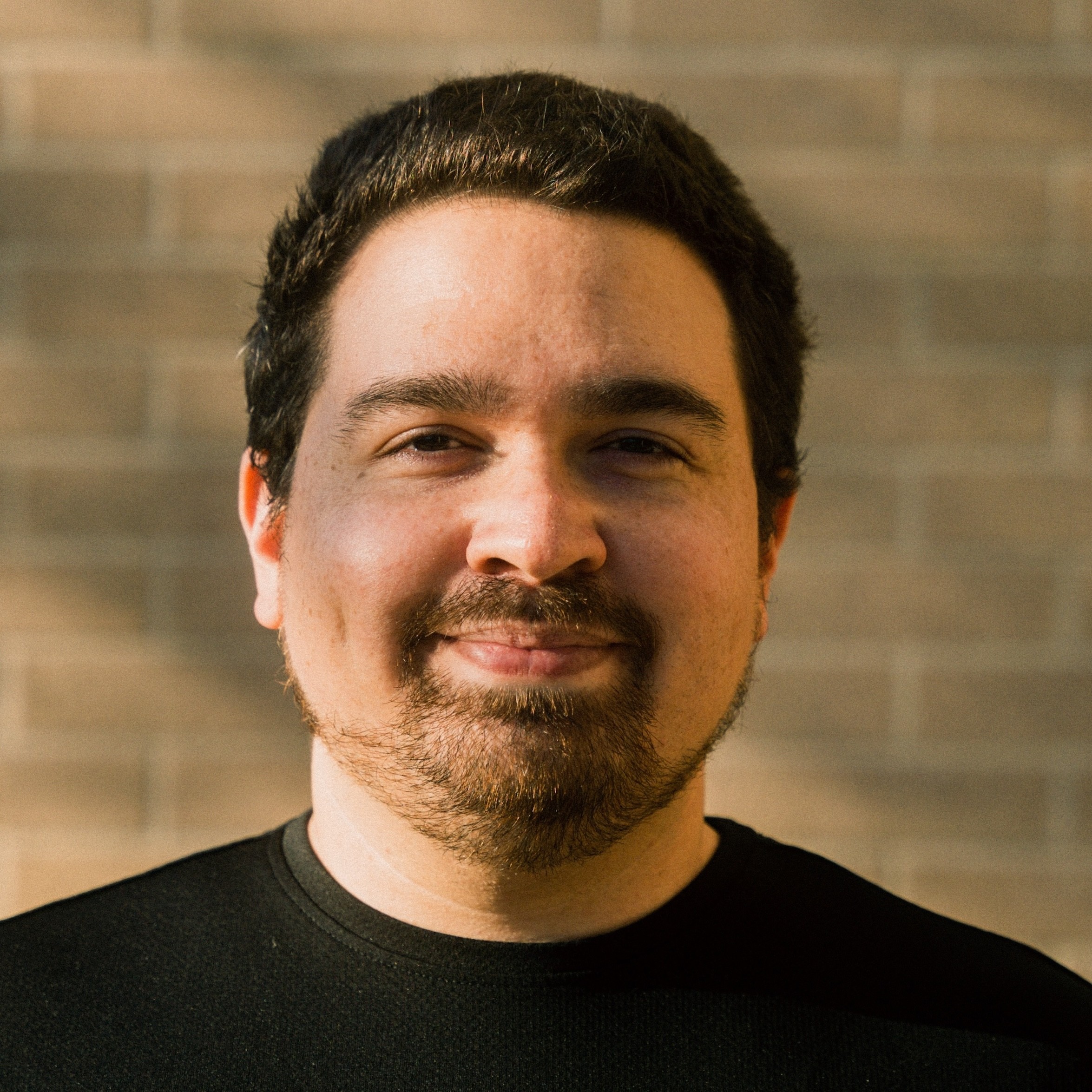

An effective EPK includes a one-paragraph bio, a professional photo, 2-3 streaming links, press quotes if you have them, and a direct contact. The artists who get responses from venues, press, and festivals keep their EPK under two pages and lead with the information the recipient needs to make a decision, not a life story.
Most EPKs fail for the same reason: they are written for the artist, not for the person reading them. A booking agent does not need your origin story. A blog editor does not need your discography in chronological order. A festival programmer scanning 400 submissions needs to hear your music, see one strong photo, read one paragraph, and know how to reach you.
Everything else is friction.
Most artist EPK examples online are descriptions of the parts. This page is the gallery instead. Two real press kits you can open right now, taken apart line by line, then three complete EPKs written out in full for the situations most artists are actually in, then a checklist you can copy into a doc. For the broader promotional context, see How to Promote Your Music.
Two Real Artist EPKs, Taken Apart
Both pages below are live press kits by working artists. We opened and read each one on 26 August 2026, and every detail here was on the page that day. Artists edit these pages, so treat this as a snapshot and open the links yourself.
0Stella: the full build, and the order it puts things in
Live at 0stella.com/press-kit.
The one-liner: "Ruthlessly authentic alt-rock blended with Irish fiddle. Paramore meets The Waterboys."
The second sentence does most of the work. Two reference points let a programmer place the sound before pressing play. The genre label alone would not do that.
The fact strip: one scannable row sits directly under the one-liner. Origin Dublin, nationality Irish-Canadian, genre Alt-Rock Irish Fusion, based in Edmonton AB, label Dead Doll Records. Every item there is something a booker or programmer sorts on, and the row answers five questions without a paragraph.
The press: four quotes, each one short, each with the outlet named on it. Buscadero Magazine in Italy, Unis Son Magazine, Earshot Distro, and X92.9 FM in Calgary. None runs longer than a line, and the mix matters as much as the count. Print, distro and radio read as three different rooms saying yes rather than one friendly reviewer.
The photos: four press images, offered as landscape colour, square colour high resolution, portrait colour high resolution, and portrait black and white. Each download lists its file size and its pixel dimensions. This is the detail most artists skip and it is the one a press editor on deadline cares about. Listing crop, size and resolution means the editor takes the right file instead of emailing you to ask for it.
Where the bio sits: below the five-track player and above the downloads. At the 26 August 2026 snapshot, it ran about 250 words. The decision-grade material is all above it, which is the single most copyable thing about this page.
Where the detail lives: Detailed tour-history and chart material is available in the download block, while selected performance and chart highlights also appear on the page. The riders are in that block too, there for the show that gets booked, not for the ask.
SHAZZE: a producer kit with no press section at all
Live at shazze.com.
The one-liner: a Warsaw-based melodic techno DJ and producer. City plus genre, which is exactly how a promoter filters a booking.
The social proof: there are no press quotes anywhere on the page. Two lists stand in for them. Artists whose stages he has shared, including Massano, Korolova, Miss Monique and Cosmic Gate. Producers who have supported the records, including David Guetta, Joris Voorn and Hernan Cattaneo.
The music: two embedded tracks, each with its label named, on EINMUSIKA and ZEHN Records. Label affiliations run through Beatfreak, Perspectives Digital, ZEHN, Higher State, Area Verde and Early Reflections, and the page names him as label manager at Perspectives Digital.
Why the missing press section is the lesson: in electronic music, support from named DJs and a release on a known label do the job a review does elsewhere. This page does not have a thin press heading with one quote under it. It has no press heading at all, and it reads stronger for it. Work out what your corner of the industry counts as proof, then lead with that.
What both pages share: almost none of the same parts, and the same instinct. 0Stella puts press and highlights before its bio; SHAZZE folds stage shares and producer support into its opening bio before the music.
For more live kits in one sitting, Bandzoogle keeps a public gallery of press kits built on its platform at bandzoogle.com/sample-epks.
The EPK Structure Checklist
Copy the block below into a doc and work down it. If a line does not apply to you yet, delete the line. An empty section is worse than a missing one.
Above the fold
One-line positioning statement: genre, plus a reference point or a city
Player or streaming link, strongest track first
Fact strip of three to five items a recipient filters on: home base, genre, label or self-released, current release
The proof
Two or three press quotes, each under 20 words, each with the outlet named
No press yet? Use what your corner of the industry counts instead: stage shares, label placements, radio adds, draw numbers, a streaming milestone
Neither of those? Delete the press heading entirely
The music
Two or three tracks maximum, best first, not newest first
Links that open without a login
A private link for unreleased material, if that is what you are pitching
The visuals
One portrait and one landscape press shot at minimum
Colour and black and white if you have both
File size and pixel dimensions listed next to every download
Recent, and consistent with how the music sounds
The bio
Under 150 words
Answers what you sound like, what you have done, and why now
Sits below the music, not above it
The close
One named contact and a working email
The specific ask, when the EPK goes out attached to a pitch
Rider and stage plot kept as a separate download, off page one
Three Complete EPKs Written Out in Full
Real press kits belong to artists at a particular point in a career, and you cannot copy 0Stella's chart positions. Here are three written out end to end, at three points most artists will recognise.
Read this first: these three EPKs are constructed illustrations. The artists, venues, festivals, and publications in them are invented, including the streaming numbers and the draw figures. They exist so you can see the shape of a finished EPK and copy the structure, not the facts. The two real EPKs are in the section above.
Example 1: No press, no placements, pitching a local venue
The most common starting point. You have released music, you have played a handful of shows, and nobody has written about you. The mistake here is padding. Leave the empty sections out and lean on what you can prove: the music and the draw.
MARLOW FEN (indie folk, three-piece, Portland OR)
The line: Fingerpicked indie folk that starts quiet and ends loud.
Bio: Marlow Fen is a three-piece indie folk band from Portland, Oregon. Their debut EP Slow Weather came out in March 2026 and has passed 40,000 streams. They play two shows a month around Portland and Eugene and draw 60 to 90 people to a headline show. The live set runs 40 minutes and works amplified or acoustic.
Listen: Cutbank (start here), then the full EP Slow Weather. Both on Spotify and Apple Music.
Live: The Rye Room, Portland (support, February 2026). Halvard Hall, Portland (headline, April 2026). Bellweather Social, Eugene (headline, May 2026). Typical headline draw 60 to 90.
Photos: Two press shots, one portrait and one landscape, 300 dpi, download link.
Contact: Dana Fen, band manager. dana@marlowfen.example
The ask: We are looking for a Thursday or Friday support slot in July or August.
Why it works: There is no press section, because there is no press. The draw number does the work a press quote would do. The ask is specific enough to answer with a yes or a no.
Example 2: Two blog placements, applying to a festival
Two small write-ups are enough to open a press section, as long as you do not stretch them. A festival application is also read differently from a venue pitch: the programmer is building a lineup, so trajectory and geography matter.
SABLE COAST (alt-pop, four-piece, Manchester UK)
The line: Alt-pop with a rhythm section that plays like a rock band.
Bio: Sable Coast are a four-piece alt-pop band from Manchester. Their second EP Hold Steady Now was released in January 2026 and reviewed by Northbound Review and The Quiet Volume. They have played 34 shows in the past year across the North of England and Scotland, including three festival slots, and headline to 250 in Manchester. This would be their first run of dates outside the UK.
Listen: Static Season (lead track), then the full EP Hold Steady Now. Live session video, 4 minutes.
Press: Northbound Review: "The rhythm section is the whole argument." The Quiet Volume: "Hooks that survive a bad PA."
Live: 34 shows in the last 12 months. Three festival appearances in 2025. Headline draw 250 in Manchester, 80 to 120 elsewhere in the North.
Team: Self-managed. No agent, no publicist.
Photos and assets: Press shots in colour and black and white, portrait and landscape, plus a stage plot on request.
Contact: Ines Vardy, singer. ines@sablecoast.example
Why it works: Two quotes, both short, both attributed. The show count and the draw give the programmer a sense of scale. The team line answers a question the programmer would otherwise have to ask.
Worth knowing what a festival is reading for.
In SXSW's own guidance to applicants, the festival says it weighs the quality of the music first, then the sense that an artist is building toward something. It asks applicants to include tastemaker press if they have it, and to name their publicist, booking agent or DSP pitching team if they work with one. It also asks whether this would be a first US tour or a new market. Trajectory is part of the judgment, not just the recording.
Example 3: Pitching a support slot on someone else's tour
This one goes to a booking agent, and it is a business pitch as much as a music pitch. The agent's question is whether you will help sell tickets in a specific city on a specific night. Answer that question directly.
JUNE ALTAIR (soul, solo with four-piece band, Atlanta GA)
The line: Soul that leans on the band, not the production.
Bio: June Altair is a soul singer and songwriter based in Atlanta. Her 2026 album Long Weather has passed 400,000 streams and she has toured the Southeast twice in support of it. She sells 300 to 450 tickets headlining in Atlanta and 150 to 250 in Nashville, Athens and Birmingham. She tours as a five-piece.
Listen: Cold Front (lead single). Full-band live video, 6 minutes.
The ask: I would like to be considered for support on the October Southeast dates, specifically Atlanta, Athens and Birmingham. I can bring a mailing list of 4,200 and an Atlanta headline draw of 300 plus into the Atlanta date.
Logistics: Five-piece, travelling in one van. 30-minute set. Backline can be shared. Available for the full October run.
Press: Halfmoon Sessions: "A voice that does not need the room to be quiet."
Contact: Rae Molyneux, manager. rae@junealtair.example
Why it works: The ask names cities and dates. The draw and the mailing list are in the pitch because they are the reason an agent says yes. Logistics are one line, not a rider.
The Two Parts People Get Wrong
The checklist covers what goes in. These two are where most kits lose the reader.
The bio
Not an autobiography. A positioning statement that answers three questions: what do you sound like, what have you done, and why should this person care right now.
Both versions below are constructed. Kit Vance is not a real artist and Northbound Review is not a real publication.
Weak: "Kit started playing guitar at age 7 and was inspired by his grandfather's record collection. After years of playing in local bands, he decided to pursue a solo career and has been writing songs that reflect his journey through life."
Strong: "Kit Vance makes folk-rock built on close harmony and a loud rhythm section. His 2026 EP 'Cold Comfort' was reviewed by Northbound Review and added to two editorial playlists. He has opened eight dates for touring acts across the Southeast US and draws 200 or more to headline shows."
The weak version is about Kit. The strong version is about what the reader gets: genre context, social proof and a sense of scale, in three sentences. For getting the reviews that fill that middle sentence, see How to Get Your Music Reviewed.
The photos
What gets an EPK ignored: low-resolution selfies, group shots where it is unclear who the artist is, heavy filters, and images that do not match how the music sounds. Your visual identity should feel cohesive with your sound. See How to Brand Yourself as an Artist for the full branding framework.
EPK Formats Compared
Format | Best For | Pros | Cons |
|---|---|---|---|
Web-based (hosted page) | General use, easy sharing | Easy to update, one link to share, can be mobile-friendly | Requires website or EPK builder |
Email attachments, formal submissions | Works offline, clean formatting | Goes stale, harder to update | |
One-sheet (single page) | Venue bookers, quick pitches | Scannable in 30 seconds | Limited space for detail |
Full EPK (multi-page) | Label meetings, festival applications | Room for depth | Most recipients will not read past page 1 |
The one-sheet is its own format with its own rules about what goes on the page and when to send it. Music One Sheet: What to Include and When to Send It covers that in full.
For most independent artists building their careers, a web-based EPK that can also be exported as a one-sheet PDF covers every scenario. Bandzoogle (paid, with a 14-day free trial), ReverbNation (free to join; its current pricing page lists the customizable Electronic Press Kit under Premium), and Canva templates can get you started. Sonicbids is worth a check before you rely on it: as of July 2026 its own site describes the platform as rebuilding, with new EPKs live and submissions, dashboards and partner tools still rolling out. Confirm current pricing and what is actually working on each vendor's own site.
See Press Kit Builders for Artists for a comparison.
Two Patterns Worth Copying
Match the EPK to the artist. A punk artist's press kit should not look like a corporate brochure. A jazz artist's should not use neon and street art fonts. The design reinforces who you are, and a mismatch reads as someone else's template.
Put the ask in the email, not just the kit. An EPK attached to a cold message works better when the message says what you want. "I'd like to be considered for a support slot on your October dates" beats "check out my EPK." The kit answers who you are. The email has to answer what you are asking for.
What to Cut
Your full discography. Nobody needs a chronological list of every release. Pick your best 2-3 tracks.
Lengthy bios. If your bio is over 150 words, cut it. Save the long version for your website. The EPK bio is a pitch, not a profile.
Irrelevant accomplishments. "Winner of the 2019 county fair talent show" does not help you book a 2026 festival. Include only achievements that are recent and relevant to the recipient.
Technical rider and stage plot. Unless the booking form asks for them up front, keep these in a separate document and send them when the show is being advanced. They do not belong on page one of a press or festival pitch.
Quotes from friends and family. "My mom says I'm the next big thing" is not social proof. Only include quotes from recognized publications or industry figures.
Frequently Asked Questions
What should an EPK include?
A one-paragraph bio, 1-3 professional photos, 2-3 music links (lead with your strongest track), press quotes or notable achievements if applicable, and clear contact information. Keep it under two pages.
How long should an artist bio be in an EPK?
Under 150 words. Answer three questions: what do you sound like, what have you accomplished, and why should this person care right now. Save the full story for your website.
Do I need an EPK if I have a website?
A dedicated EPK page on your website is easy to share through one link, can be updated in place, and can be saved as a PDF when needed.
Where can I see real EPK examples?
Two are taken apart at the top of this page: 0stella.com/press-kit and shazze.com. Bandzoogle also keeps a public gallery at bandzoogle.com/sample-epks.
Read Next
Before You Write the Bio:
The hardest line in an EPK is the first one, and it comes from knowing what you actually are. Orphiq helps you define your sound, your story, and your audience in one place. Apollo, Orphiq's AI music strategist, works from what you share or connect to help you turn that into the one sentence that goes at the top of the page.